In the summer of 2025, Boca Raton was arguing about a plan to break up Memorial Park and move its facilities elsewhere in the city. In the middle of that fight, a simpler question came up at the council meetings. What does the park actually memorialize? According to Boca Daily News, a few residents said it honored Americans who fought in World War II. Another said it honored every city resident who died in service. Nobody knew for sure, so George Brown, who was city manager then, asked the Boca Raton Historical Society.
His answer matters to Spanish Village more than to any other part of town. The ballfields, the Community Center and City Hall that sit south of the neighborhood occupy land the military left behind. Since voters rejected a developer partnership in March, the city has been planning that land on its own.
What the name actually remembers
Boca Daily News reported Brown's account of what the Historical Society found:
"Memorial Park, as a name, wasn't linked to any specific historical event, and it wasn't dedicated to an individual or people who lost their lives in World War II. It was really named in recognition of the fact that Boca Raton was an Army Air Corps base."
That base was the Army Air Corps' radar training school, which moved to Boca Raton from Scott Field in Illinois early in the war. The Historical Society records hundreds of structures built north of Palmetto Park Road up to Yamato Road, between Dixie Highway and what are now the CSX tracks. The Tuskegee Airmen, the crew of the Enola Gay and future astronaut Gus Grissom all spent time there learning radar.
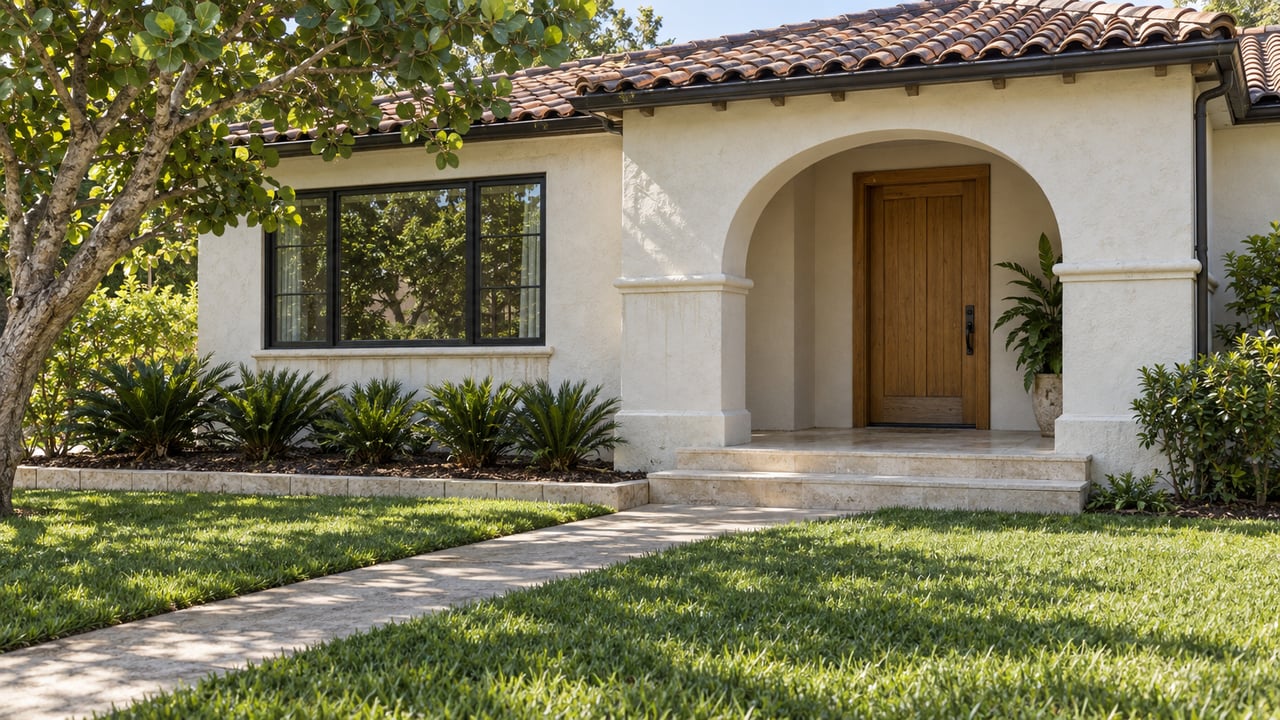
Spanish Village sits north of Palmetto Park Road, in the same corridor. The neighborhood is older than the base. A 2000 Sun Sentinel piece described it as home to 12 villas that Addison Mizner designed and built in the 1920s, with barrel-tile roofs, stucco walls and hardwood floors. The Historical Society's list of designated historic sites includes the Spanish Village House, also called the Warren House, at 200 Northwest Seventh Street. So the neighborhood was here first, and the base grew up around it. Brown also said that many properties along Dixie Highway near 1st and 2nd avenues were part of the base and that some of those buildings still stand.
How barracks land became the civic campus
The civic land next to Spanish Village was never laid out as a single master plan. It was built up in stages:
- 1947: A hurricane destroyed some of the base's facilities. After the war, radar became standard equipment, and the base shrank to an auxiliary field. It was eventually bought by the city or transferred to Florida Atlantic University.
- 1959: The city began building community park facilities on part of the old airfield property that had been used for barracks.
- 1963: Ground was broken for the 1964 City Hall. In Brown's words, that building "is still there, disguised by the building we put up in 1980 when we renovated city hall and the community center."
- Later years: The park picked up softball fields between NW 2nd Avenue and Crawford Boulevard. A plaque near the fields honors a youth sports organizer and went up long after the park opened.
Each piece was added when the city needed it. That's the background for the 2025 proposal, which would have redesigned the whole site in one deal.
Why the March vote cleared the table
The One Boca proposal would have given developers Terra and Frisbie a 99-year lease on the downtown government campus. The plan called for residences, a hotel, offices, shops and restaurants, plus a revitalized Memorial Park near the Brightline station. On March 10, 2026, voters rejected the lease decisively. The Sun Sentinel reported unofficial results showing nearly 75% voted no, about 9,000 more votes than the yes side. On the same ballot, a $175 million bond for a new police headquarters also failed. The city said all One Boca work would stop.
None of the heights, unit counts or building layouts from the One Boca renderings is in play now. The city didn't pick a new partner. It took the planning back in-house, and the guardrails it has set so far are different from what came before.
What the new plan pays for
On July 28, the City Council unanimously ranked Chen Moore and Associates, a Fort Lauderdale engineering, planning and design firm, as its top choice. The Coastal Star reported that developers who stand to profit will not be part of the project and that the council will make the final decisions.
On September 8, the council voted 3-0 to approve Resolution No. 113-2026. That authorized a $519,925 contract with Chen Moore and up to $52,000 in contingency, for a total of $571,925, according to BocaPost. The study covers about 17 acres of city-owned land: Memorial Park, City Hall, the Community Center, the Tennis Center, the Singing Pines building complex, and the public spaces and rights-of-way around them. The money comes from the Resident-Led Memorial Park Enhancements line of the proposed fiscal 2026-27 Capital Improvement Program.
The fee is divided across four phases over about six months:
| Phase | What happens | Cost |
|---|---|---|
| 1. Initiation and listening framework | Interviews with each council member, meetings with the Parks and Recreation Board and the Greater Boca Raton Beach and Park District, and a public engagement plan that goes back to council | $132,070 |
| 2. Community listening | Up to six small-group listening sessions, up to six stakeholder sessions, a community survey, and appearances at two community events | $52,620 |
| 3. Design charrette and concepts | A two-and-a-half-day charrette producing up to two concepts for City Hall, the Community Center, the Tennis Center and Singing Pines | $249,350 |
| 4. Final plan | Recommendations brought to council | $85,885 |
The phase two listening sessions cost about a fifth of the design charrette. The scope was also trimmed after selection. Deputy City Manager Andrew Lukasik described that to the council as "right sizing." The charrette went from three days to two and a half, and a separate final public engagement event was cut. That leaves the listening sessions, the survey and the two community-event appearances as the main openings for public comment before concepts are drawn. Under the contract, none of them can start until the engagement plan has gone back to the council. With six months counted from the September 8 approval, the final plan would land around early 2027. That's an estimate, not a published deadline.
The two commitments with the most bearing on Spanish Village
The Coastal Star reported two commitments from Chen Moore that bear directly on the neighborhood. The firm committed to preserving the banyan trees on the site, and it is open to Addison Mizner-style architecture for any new building.
For Spanish Village, the Mizner commitment means new buildings next door could follow the same architectural tradition as the neighborhood's 1920s villas. The banyan commitment means the site's largest trees stay in place whatever the concepts propose.
The same report says the firm will consult veterans on plans for Memorial Park. That same Coastal Star piece describes the park as commemorating World War II veterans, so the older understanding of the name is still in circulation. The account Brown gave after checking with the Historical Society is narrower. He said the name recognizes that Boca Raton was an Army Air Corps base and was not dedicated to the people who died in the war. Either way, the park sits on barracks land from that base, so consulting veterans ties the plan to the site's actual wartime history.
What is still open
A design firm and a budget are settled. Most other questions about the site are still open:
- Building program: The approved scope asks for concepts and recommendations, not a construction plan. No heights, park acreage, building locations or facility relocations have been set.
- The downtown library: It isn't one of the facilities named in the resolution's 17-acre scope.
- The police headquarters: It's a separate issue. After the bond failed, the Sun Sentinel reported in May that the city was weighing a downtown location against other sites.
- A charter question: In May, the council adopted an amended Save Boca ordinance 5-0 and voted 4-1 to put the group's charter-amendment language before voters by March 2027, Boca Magazine reported.
The park facilities started going up in 1959, and City Hall went up in the early 1960s and was wrapped in a new building in 1980. This time the city is planning the whole 17 acres itself, without a developer partner.
The civic campus planning will affect Spanish Village for years, through what gets built, how high, and in what style. Jared and the team at Tangent Realty follow how decisions like these change the way buyers value the streets around them. If you own a home near the campus and want to talk through what the master plan could mean for it, let's connect.